> For the complete documentation index, see [llms.txt](https://docs.neodove.com/llms.txt). Markdown versions of documentation pages are available by appending `.md` to page URLs; this page is available as [Markdown](https://docs.neodove.com/admin-portal/contacts/what-are-custom-contact-properties.md).
# What are Custom Contact Properties ?
Custom Contact Properties (CCP) in NeoDove are essentially settings that enable you to use specific fields for filtering data from your database.
When you're importing **data** into NeoDove from various sources, it often comes with different fields or attributes linked to leads.
This means you're telling NeoDove to recognize and use that field for **filtering purposes**. It's a way to **customize** how you sort and access your data based on your unique needs.
**How to Enable it?**
1. **Log in** to your NeoDove account ( )
2. Go to the **Contacts** Section.
3. Click on the “**Custom Contact Properties**” option available at the top of the screen.
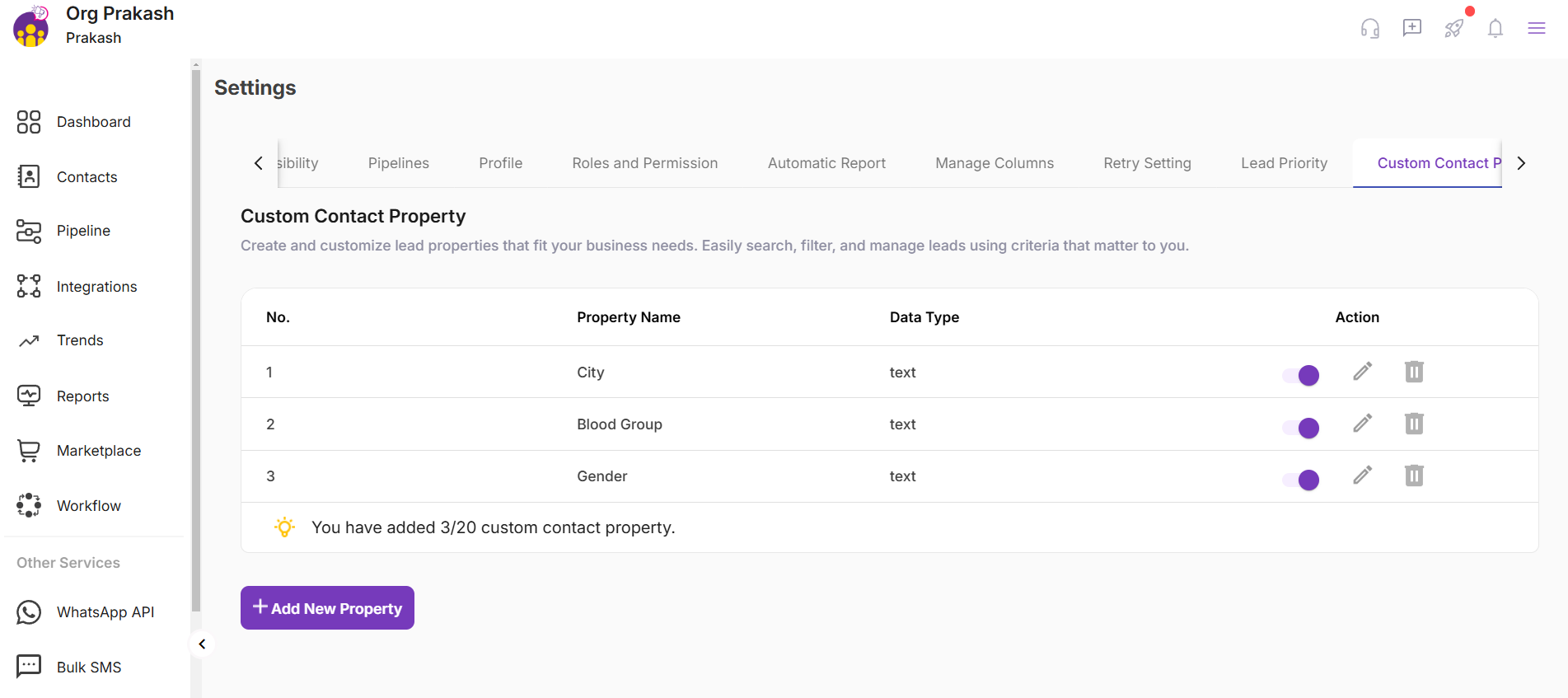
4. After clicking on Custom Contact Properties the following page will be shown. From here the user will be able to see the already created properties and can add new property as well.
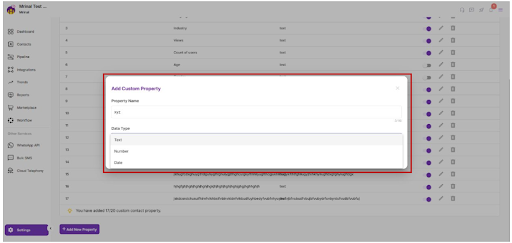
5. **Add CCP** - You can add properties by clicking on the " **Add Property**" button. Along with that you can select the data type of the CCP as well. Currently we have 3 types of CCP that are **text, date and number**. When selecting the date type CCP, you also need to select the type of date format from the dropdown. Mapping will be done only when the format selected here matches the format of date in your input file.
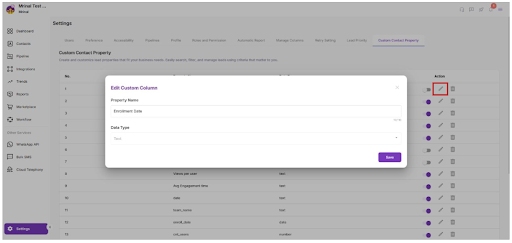
6. **Edit CCP -** You can also edit any CCP (only name) by clicking on the edit icon.
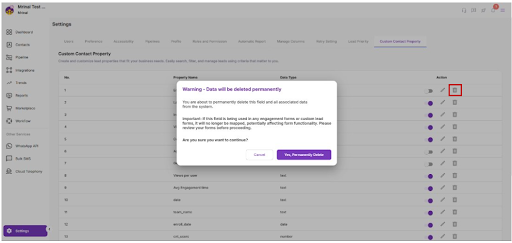
7. **Delete CCP** - You can delete a CCP by clicking on the delete icon. Deleting a CCP will permanently delete the data associated with that CCP.
8. **Activate and Deactivate a CCP -** You can activate or deactivate a CCP by just clicking on the toggle switch. When you deactivate a CCP, mapping will be stopped temporarily till the time you again reactivate the CCP back.
## **Searching and Filtering a CCP**
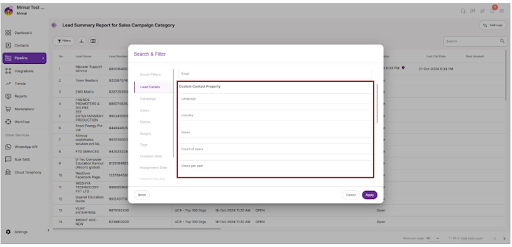
You can search or filter a CCP from filters that are provided in the lead summary page as well as contacts page.