> For the complete documentation index, see [llms.txt](https://docs.neodove.com/llms.txt). Markdown versions of documentation pages are available by appending `.md` to page URLs; this page is available as [Markdown](https://docs.neodove.com/admin-portal/integrations/facebook-integration/common-errors.md).
# Common Scenarios for errors in Facebook Integration
Know the common cases when leads from Facebook will not be created under NeoDove.
### **Scenario 1 :-**
***
Multiple integration of the **Facebook same page.**
{% hint style="success" %}
**Answer ->**
In NeoDove for **Facebook Integration** you connect a Facebook Page.
All the leads coming through the **Ads** of selected **Facebook page** will be created in NeoDove through the **single integration**.
If you create **multiple integration** using same Facebook Page then the **leads** will not be created under **NeoDove campaign**.
{% endhint %}
### **Scenario 2 :-**
***
On the **Testing Page**, error is coming as **“Lead Access has been revoked”** while testing the integration.
Allow access to any CRM on Facebook
{% hint style="success" %}
**Answer ->**
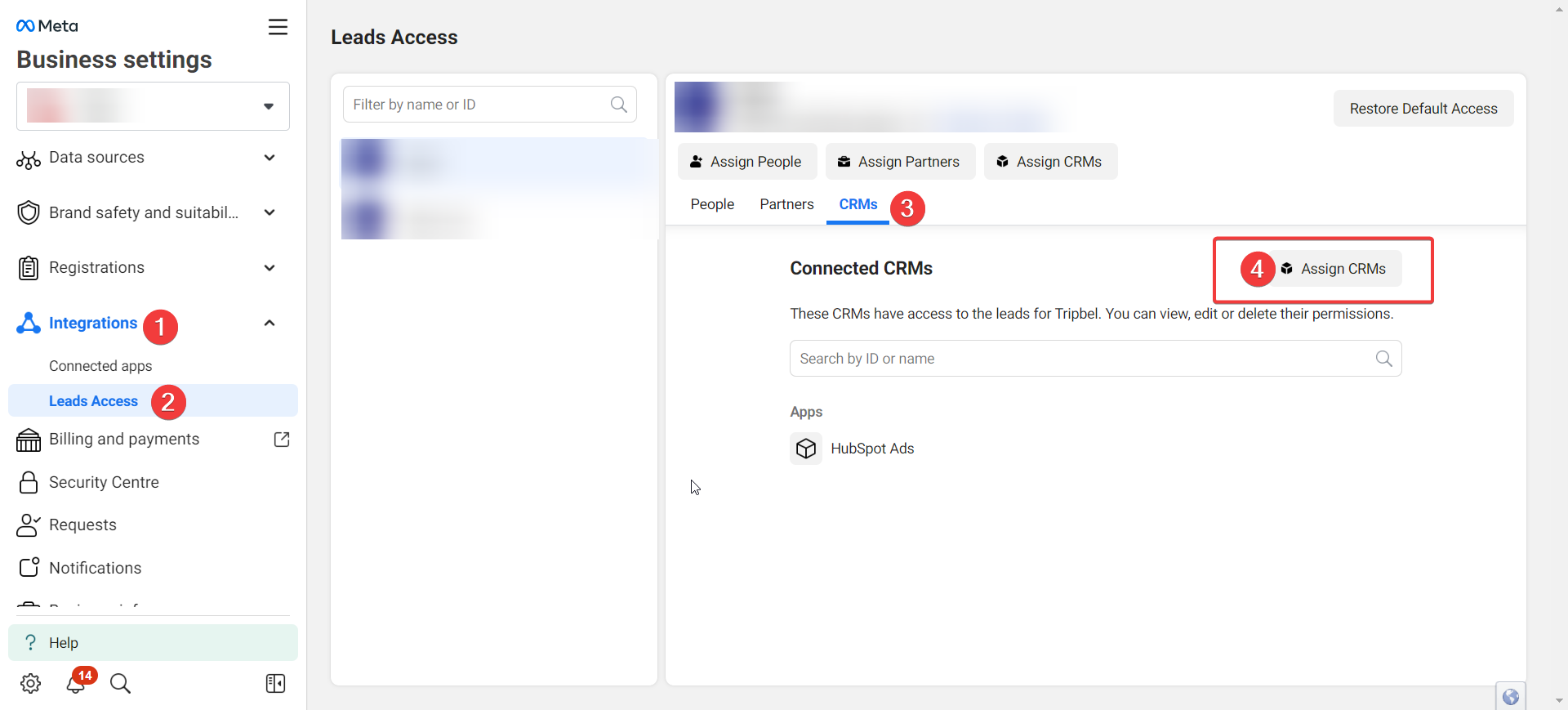
1. Then go to the “**Meta Business Suite**” of your Facebook account.
2. Go to the **Settings** on the bottom.
3. Go to the **Business Settings**.
4. Click on the “**Integration option**” on the left side Menu.
5. Click on the “**Lead Access**” option.
6. Then go to the option “**CRMs**”
7. Then select “**NeoDove**” and allow.
{% endhint %}
### **Scenario 3 :-**
***
**Custom Questions** in the Facebook Lead Form.
1. Check the **Form** under Facebook which is **active** on FB Ad. [Click here](https://business.facebook.com/latest/instant_forms/forms/)
2. Check the “**Question Type**” of the form.
3. If you are using the **custom questions** for collecting "name" & "phone number" then the **field name** of these questions will be **different** which NeoDove accepts by **default**.
Field name of the questions in your Facebook lead forms
4. Then you have to do the Facebook Integration with the “**Custom Form Field Names**” feature and **map** the same field name according to your **FB lead form**.
**Image 1**
**Image 2**
### **Scenario 4 :-**
***
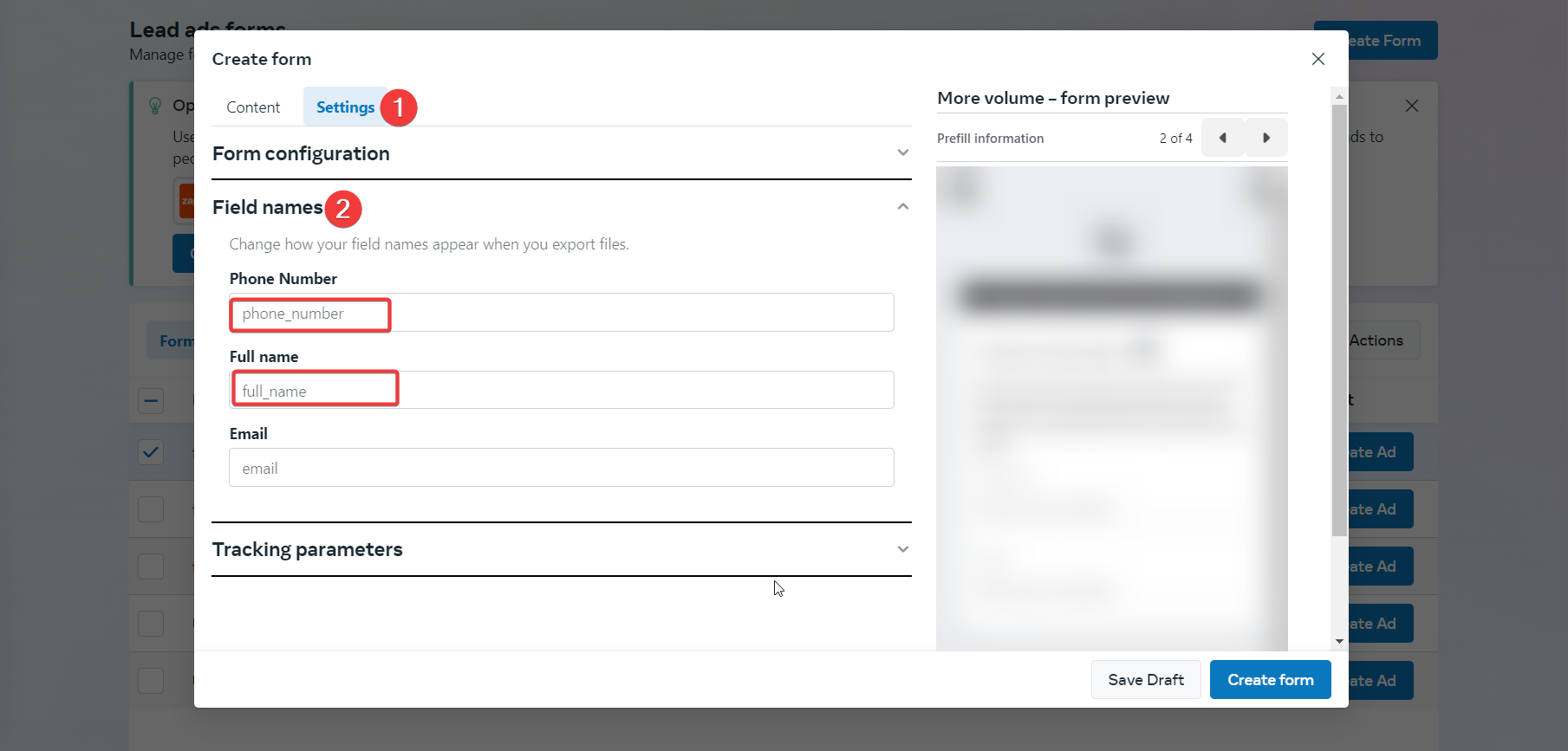
Different **form field names** on Facebook Lead Form.
1. Check the **Form** under Facebook which is **active** on FB Ad. [Click here](https://business.facebook.com/latest/instant_forms/forms/)
2. Check the “**Settings**” of the form.
3. Go to the **field names**.
4. Check if there is any other **text** or **language** for the “Name” & “Phone Number” **question field**.
5. In this case you have to do the Facebook Integration with the “**Custom Contact field**” feature. (**Refer to the images of Scenario 3 > Point 4**).